Refrigerator Storage: Why Some Space Works and Some Just Holds Things
Share
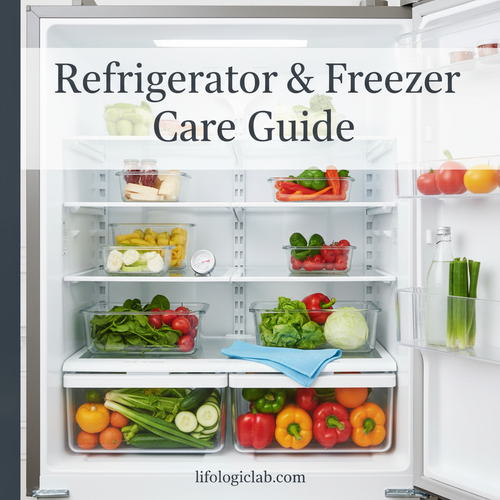
Open a typical refrigerator and you will find two kinds of space sharing the same walls. One kind earns its keep: items go in, come out, and get replaced without much thought. The other kind is technically available but practically useless — the back of a deep shelf where a jar has been quietly aging, the headroom above a row of cans that only fits a bag of rice cakes, the corner where a container goes in but cannot come back out without a full excavation. The difference between these two kinds of space is the real subject of refrigerator organization, and it is not settled by buying more bins.
The central distinction is between physical capacity and usable capacity. A refrigerator can hold a certain number of liters, but how much of that volume you can actually see, reach, use, and put back without effort is a different number. Most refrigerator frustration comes from maximizing the first number and ignoring the second. Filling the fridge to the walls feels efficient until one item becomes invisible behind another, a container gets stuck, or the air that is supposed to circulate around food stops moving.
Dead space is not the same as wasted space
Not every empty area in a refrigerator needs to be filled. Some clearance is functionally necessary. Refrigerators rely on airflow to maintain even temperatures and recover after the door opens; blocking vents, fans, or return-air channels does not just reduce efficiency — it can create warm pockets where food sits above safe temperatures. That gap above the top shelf might look like a storage opportunity, but if filling it means covering a vent or crowding the ceiling so items cannot be safely slid in, the space is better left alone.
Dead space, in a useful sense, is space that exists but costs too much to use. A deep shelf has more surface area than a shallow one, yet the back zone is only reachable by removing front items. If those front items are weekly staples, the back becomes a place where things go to be forgotten. The same is true of the door bin depth: nice for a row of small bottles, awkward for anything wide. Before adding an organizer, measure the usable depth — not the shelf depth — and ask what item in your household actually fits that shape and needs to live there.
Retrieval friction decides what gets eaten
Refrigerator contents decay in a specific order, and it is rarely the order printed on the label. Food gets forgotten because retrieving it requires too many actions: open door, move the milk, lift the bin, reach behind the yogurt, realize the yogurt is past its date. Each additional action reduces the chance that item gets used. This is retrieval friction, and it matters more than how neatly the fridge photographs.
The reverse is also true. A system that is easy to retrieve from but hard to return to will accumulate displaced items on counters. If returning a jar requires lifting a lid, unstacking two containers, or fitting it into a tightly packed bin, it will sit out until someone is motivated enough to deal with it. That is why the most sustainable refrigerator layouts prioritize short, simple routes: open, take, use, put back in roughly the same motion.
Practical translation: high-frequency items — dairy, eggs, produce you eat daily, leftovers you intend to finish — should occupy the easiest sightlines and the fewest steps. Rarely used condiments, backstock, and long-life items can live in less convenient spots, provided they remain visible enough to be checked. This is not aesthetic preference; it is workload management disguised as shelf placement.
Visibility is a tool, not a goal
Clear containers have a genuine function. They make inventory visible, which helps prevent duplicate purchases and forgotten leftovers. But clear bins also have limits. They can turn the shelf into a wall of bulky rectangles where the item you want is behind the bin holding something else. They can hide small jars at the bottom. They do not extend food life, and filling a bin with items that are already shelf-stable rarely changes how often those items are used.
Opaque or mixed storage is not automatically worse. A fridge that looks calmer may be easier to scan if the grouping is logical. The question is whether household members can find what they need without emptying half a shelf. If visibility is the goal, a few clear containers for similar small items can help. If the goal is actually visual calm because the fridge is visible from the living room, then closed containers do that job — but they need a simple labeling or location habit so items do not disappear into a plastic fog.
For households wanting a middle ground, a small set of rectangular clear bins of a consistent footprint can corral loose small items without swallowing the whole shelf. A fridge organizer bins set is one option when the category is genuinely small, similar, and frequently used — but the bin should follow the category, not the other way around. If your category is “everything on the middle shelf,” the bin is just a drawer with extra steps.
Shelves, drawers, and the geometry of use
Refrigerator interiors are not uniform boxes. They contain fixed shelves, adjustable shelves, crisper drawers, door bins, and often a few awkward narrow gaps. Each has different access geometry. Shelf height determines whether a tall bottle fits without removing the shelf; shelf depth determines how far back items disappear. Door bins offer easy access but often run warmer than interior shelves, which matters for dairy and highly perishable foods. Crisper drawers work best when their humidity setting matches the produce inside, but they also become forgotten territory when they are deep and opaque.
A useful exercise is to identify the zones by reach rather than by shelf number. The front edge of the middle shelf is prime real estate. The back of a lower shelf is less convenient and often colder. The door is easy to reach but exposed to temperature swings. Match items to zones based on how often you use them and how much temperature stability they need. Raw meat, poultry, and seafood should be stored where drips cannot contaminate ready-to-eat foods — generally on a lower shelf or a dedicated tray, not above produce you will eat raw. This is a food-safety rule, not a tidiness preference, and no organizer changes it.
Stacking deserves similar honesty. Stacking containers increases density but makes the bottom item harder to retrieve and return. A stack of two is usually manageable; a tower of four is a small engineering project every time you want the bottom one. If you stack, put the often-used item on top or use a shallow turntable only for small, stable items that rotate without tipping.
Deep shelves create a specific problem: the back row becomes invisible. Solutions range from simple to structural. Shallow bins that pull forward can help if they fit without blocking airflow. Turntables can work for round condiment bottles but waste space around square containers and can tip tall items. A lazy susan cabinet organizer is a reasonable choice for a deep shelf of similar-height bottles or jars, but it is not a fix for every shelf, and it does not create space where none exists.
Category design should match how people actually cook
A refrigerator organized by item type — all dairy here, all condiments there — makes sense in a diagram but can fail in a household where different people cook different meals. Categories that are too broad become miscellaneous. Categories that are too narrow create too much sorting. A household with two adults and a child may need zones by meal or by user as much as by food type: breakfast items together, lunch components together, ingredients for the week’s recurring dinners together. The point is not to find the one correct taxonomy. The point is to make returning an item obvious in a rush.
Labeling can help, especially in shared households, but only after the category makes sense to the people using it. A label that says “sauces” is useful. A label that says “Asian cooking sauces, opened, except the one for the birthday cake” is a maintenance burden dressed as precision. Simple, shared language beats detailed taxonomy in a space everyone opens fifteen times a day.
Inventory control beyond the front row
Backstock is the reserve supply behind the everyday item: the second jar of pickles, the extra carton of milk, the bag of coffee that will not fit in the canister. It is not the same as daily-use supply, and it needs its own logic. Visible reserve stock prevents duplicate purchasing. Hidden reserve stock — the deep back corner, the second crisper, the forgotten door shelf — encourages buying a third jar because no one knew the second existed. A simple habit of keeping reserve items in one consistent, visible location with a rough capacity limit usually does more than any bin.
Overflow is information. When the fridge is stuffed every week, the cause might be too much incoming food, unclear ownership of leftovers, meals planned without checking what is already there, or categories that no longer fit. Reorganizing the same volume more elegantly does not change the volume. Sometimes the honest answer is that the refrigerator is at capacity, and the fix is fewer duplicates and a better leftovers plan, not a new organizer.
Maintenance that survives a weekday
A refrigerator system that works only when everything is perfectly placed will fail by Thursday. The useful question is whether you can put tonight’s leftovers away, grab a snack, and find the milk during a hurried morning without rearranging the shelf. Systems that tolerate variation — a few clear bins that slide out, one shelf for leftovers, one zone for high-use items, a visible reserve area — tend to outlast elaborate arrangements.
Cleaning access matters too. Containers that are too large for the shelf or too heavy to lift make spills harder to deal with, and spills that never get wiped up become the reason something is avoided. Leave enough clearance to slide items out, and read the manual if you are placing shelves or bins near vents or the ice maker.
None of this requires matching containers or a staged set of labeled jars. It requires treating the refrigerator as a working system where visibility, return effort, airflow, food safety, and real cooking habits all occupy the same appliance. The most useful storage is not the storage that fits the most; it is the storage that lets you find, use, and put back what you have without a side quest. If a space cannot be reached easily, it will not be kept filled with the right things, no matter how attractive the bin.